

EPS (Expanded Polystyrene) and Rock Wool are both commonly used insulation materials, but they have distinct properties and applications.
Here are the key differences between EPS and Rock Wool:
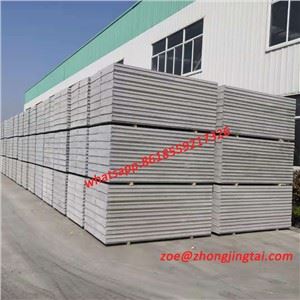 Composition and Structure
EPS:
Made from expanded polystyrene beads that are fused together.
Lightweight and rigid foam.
Contains air trapped within its structure, providing insulation.
Rock Wool:
Made from natural rock (typically basalt) and recycled slag, spun into fibers.
Dense, fibrous, and non-combustible.
Offers a combination of thermal insulation and soundproofing.
Thermal Insulation
EPS:
Provides good thermal insulation due to its closed-cell structure.
Has a relatively high R-value per inch (resistance to heat flow).
Rock Wool:
Also provides effective thermal insulation.
Has a slightly lower R-value per inch compared to EPS but performs well in a wide range of temperatures.
Fire Resistance
EPS:
Flammable and can melt or ignite at high temperatures.
Requires fire retardants or protective coverings to enhance fire safety.
Rock Wool:
Non-combustible and can withstand very high temperatures.
Naturally fire-resistant without the need for additional treatments.
Sound Insulation
EPS:
Provides some level of sound insulation, but not as effective as Rock Wool.
Primarily used for thermal insulation.
 Rock Wool:
Excellent sound-absorbing properties due to its fibrous structure.
Commonly used for both thermal and acoustic insulation.
Moisture Resistance
EPS:
Resistant to moisture and water vapor, but can degrade if exposed to prolonged water exposure.
Generally used in dry conditions or with protective barriers.
Rock Wool:
Water-resistant and does not absorb moisture easily.
Maintains its insulating properties even in humid or wet conditions.
Applications
EPS:
Commonly used in insulation for walls, roofs, and floors.
Frequently used in packaging and lightweight construction applications.
Rock Wool:
Widely used in industrial, commercial, and residential buildings for insulation and soundproofing.
Ideal for use in high-temperature environments and fire-resistant constructions.
Environmental Impact
EPS:
Derived from petroleum-based products.
Can be recycled, but recycling rates are relatively low compared to other materials.
Rock Wool:
Made from natural and recycled materials.
More environmentally friendly and recyclable, with less impact on the environment.
In summary, EPS is preferred for lightweight, moisture-resistant, and cost-effective thermal insulation, while Rock Wool is favored for its superior fire resistance, soundproofing capabilities, and environmental benefits. The choice between EPS and Rock Wool depends on the specific requirements of the project, such as the need for fire resistance, sound insulation, and environmental considerations.