


Xiamen ZJT Building Materials
The Best Solution for Your Construction Projects
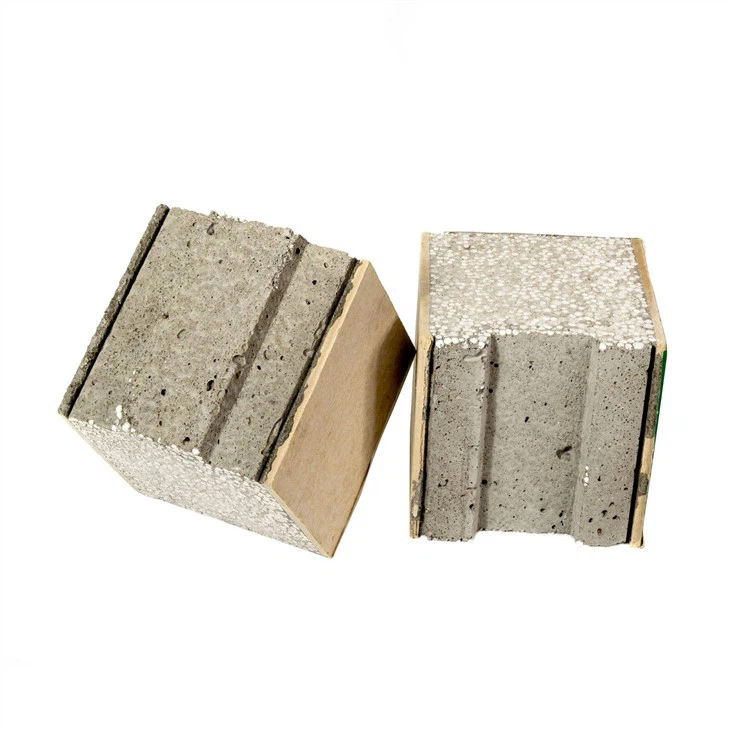
As a leading EPS Cement Sandwich Panel manufacturer in China, our factory is located in the beautiful city of Xiamen, with a modern working environment and production base. Our advantages are specifically reflected in the following aspects:
Complete Range of Products
Our company can provide you with EPS Cement Sandwich Panel, Interior Wall Panel, Exterior Wall Panel, Roof Panel, Floor Panel, Fireproof Cement Sandwich Panel, Steel EPS Sandwich Panel, PU Sandwich Panel, Water Permeable Brick, Wall Panel Installation Accessories and other building materials.
High Quality Standards
Each of our series of products is produced to very high quality standards. Not only do they have a strong and impact-resistant core, they are also highly thermally, soundproofed, fireproof and waterproof.
Environmentally Friendly
Our products also comply with the country's environmentally friendly building policy, which means they are sustainable and environmentally friendly solutions. Therefore, anyone can use the building materials we produce with confidence.
Professional Customization Service
We can also design sandwich wall panels to your specific requirements and preferences, ensuring you get the product you need for your building project. Our team of experts is ready to answer any questions and provide more information on how to help you with your construction needs.


PU sandwich panels, also known as polyurethane sandwich panels, are structures consisting of polyurethane foam sandwiched between two side panels made of different materials, such as metal. Polyurethane rigid foam is at the heart of this type of panel. This material has very high insulator properties and enables energy savings, with associated costs of up to 60%. While maintaining high thermal insulation efficiency, they are lightweight and cost-effective compared to other thermal and cold insulation materials.
Features of PU Sandwich Panels

Heat Insulation
PU sandwich panels are available in different thicknesses. The best part about this material is that it has the highest density of all insulation boards. PU sandwich panels are an excellent choice for refrigerators, freezers and cooling facilities because of their excellent thermal insulation properties.

Fireproof
Polyurethane sandwich panels are a good choice for buildings that require fire-resistant construction. These panels have a steel layer on the surface, which means they are virtually non-flammable. In the event of a fire, it can help reduce damage.
Low Thermal Conductivity
PU sandwich panels have a low thermal conductivity, which means you can save money and energy with it. PU sandwich panels can help reduce energy bills by keeping buildings cool in the summer and cold in the winter. This material is an excellent choice for buildings that need to be rust-resistant.

Flexibility
The flexibility of PU sandwich panels makes them ideal for a variety of applications. Its flexibility means it can be applied to both the exterior and interior of buildings. Moreover, they are very easy to cut into different sizes or shapes according to installation needs.

Light Weight
In terms of weight, PU sandwich panels are versatile. It is lightweight and can be easily transported from one geographical location to another. Additionally, it can carry heavier occupants and building contents. This property gives PU sandwich panels mechanical strength and top-notch thickness and density values.
Quick and Easy Installation
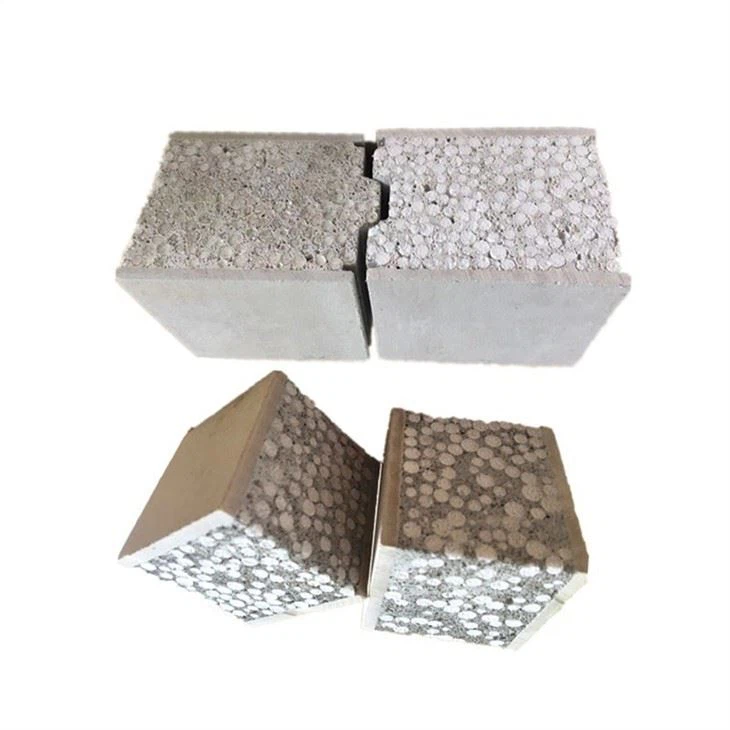
The joint lock profiles have been carefully designed to ensure fast laying of the panels. The tapered inner contact edge and longitudinal groove are also important for an efficient installation process. This makes the installation of PU sandwich panels not only fast but also can be completed by two or more people.
Advantages of PU Sandwich Panels
Efficient Insulation
Since the thermal conductivity of the foaming agent used in PU sandwich panels is much lower than that of air (good thermal insulation), the thermal insulation performance of PU rigid foam is better than pure air materials such as mineral wool, glass fiber, and polystyrene. In addition, its unique closed cells and high gas diffusion resistance give it excellent long-term insulation properties that can last for 20-50 years or more.
Corrosion Resistance
The closed-cell structure of polyurethane rigid foam and the surface materials used make it excellent air-tightness and moisture-proof, and it can be made into an inlaid structure during the molding process for easy assembly. It does not require additional insulation to protect against moisture, so it does not require a lot of insulation. No other insulation material can achieve these properties.
Wide, Light and Thin-Walled
Since PU rigid foam is also used as the structural material, the overall structure has the advantages of being lightweight, large-span, and high-load-bearing. Compared with other insulation materials, polyurethane rigid foam has thermal insulation properties. Therefore, thinner polyurethane sandwich panels can meet building energy requirements and allow the use of thinner panels during construction, saving building space.
Easy to Install
PU sandwich panels are prefabricated in the factory without additional processes and structures, and can be directly used for building installation. Since PU is a synthetic material with excellent performance. It has the advantages of high specific strength and low thermal conductivity, these panels can maintain stability and long service life in various climates after installation.
PU Sandwich Panels Specification
| Product Name | Thermal Insulation PU Insulation Panel | |
| Dimensions | Total thickness | 50/75/100/120/150/200mm |
| Width | 950/960/1150mm | |
| Length | Less than 11.8m | |
| External face | Material | Prepainted Steel Sheet |
| Thickness | 0.3-0.6mm | |
| Coat | According to the RAL | |
| Insulation | Optional core material | Polystyrene(EPS)/PU/ROCKWOOL |
| Thickness | 50-200mm | |
| Density | EPS 12~25KG/M³; | |
| PU36-45KG/M³; ROCKWOOL>40KG/M³; | ||
| Shipping terms | ||
| Package | Standard Seaworthy Package | |
| Delivery time | Within 15-20days after receive the deposit | |
| application | Purification workshop condole top , Industrial workshop and warehouse, clean room | |
Applications of PU Sandwich Panels
These PU thermal insulation elements are particularly suitable for roofs and facades of industrial buildings that are processed at low temperatures. They can effectively insulate cold storage rooms and warehouses, sports centers and shopping malls, as well as new and refurbished homes. details as follows

Exterior Wall
Exterior wall PU sandwich panels have been improved and can be used to build envelopes for homes, schools, hospitals, industrial centers or shopping malls. Sandwich panels can also be used for internal partitions that require thermal insulation. The advantages offered by these facade panels depend largely on the method of connection between the panels. The fastening system is tongue and groove, ensuring full protection against the loss of heat and moisture.

Roof
The properties of PU roof sandwich panels are different from exterior siding panels in that they must withstand large amounts of snow, rain and other climatic factors. They are secured to the structure with self-drilling screws to prevent leaks in rainy and wet conditions, and are often combined with sealed joints to speed up installation without sacrificing insulation.
Cold Room
PU sandwich panels can also be used in refrigerators or freezers that require heat insulation. For these cases, the thickness of the sandwich panel is designed to be thicker than normal in order to be able to withstand negative temperatures. To maintain the extreme temperatures required to preserve fresh food, special attention must be paid to the seams between sandwich panels.
Proper Handling and Storage of PU Sandwich Panels
The way you handle the sandwich panel can sometimes determine whether the PU sandwich panel will crack or stay strong during storage. You should consider various scenarios and how best to handle sandwich panels. Here are some of them
*A forklift can transport sandwich panels within 10m. Note that the lifting point must be located in the center of the sandwich panel bundle. And need to use plywood to protect the sandwich panel, which is placed between the forklift and the bale.
*The forks of the machine should be longer than the width of the sandwich panel. This helps a lot with the balance of the panel.
*When the length of the sandwich panel exceeds 10m, 2 forklifts need to be used for simultaneous operation. Note that the distance between the center of the panel and the forklift should be the same.
*The upper surface of the fork should be smooth and clean. This is essential to prevent any possible damage to the panel surface.
*You should not uninstall too many panels at any given time.

Storage of PU Sandwich Panels

*You should always place them on a smooth, dry and hard surface.
*You can also add support packages such as wood or polystyrene. This helps protect the sandwich panels from surface elements.
*You should also place the sandwich panels at a slope of around 5%. This is essential for drainage in the event of condensation or leaks in the room.
*Too many panels should not be stacked on top of each other. We have special instructions on how many panels you can glue to each other.
*If you must store your sandwich panels for several months without using them, be sure to store them under a shelter. It is recommended that the stacking time should not exceed two months, otherwise the appearance and quality will be affected.
*If the sandwich panels are stacked without any shelter, a tarpaulin should be placed on top to prevent rain, especially for rock wool sandwich panels. Also, make sure the room has adequate ventilation.
Differences between PIR and PU Sandwich Panels
PU sandwich panels and PIR sandwich panels are two building materials that are often compared. The difference between the two is mainly reflected in the performance of the core material, specifically in the following aspects:

Fire Resistance
PIR foam: generally B2 level, by adjusting the polyisocyanurate acid ring concentration and other formulation technologies, it can reach B1 level, and the oxygen index can reach more than 35%.
Thermal Insulation Performance
PIR foam: Thermal conductivity can be as low as 0.018 W/MK (25 degrees Celsius).
Bulk Density
PIR foam: generally, it must be 45-55kg/m3 to achieve satisfactory strength requirements.
Temperature Range
PIR foam: up to 205 degrees Celsius.
Water Absorption Rate
PIR foam: up to 0.9%.
Our Certifications
Our company has obtained the following certificates

Factory Pictures
Below are photos of our factory for you to view

Frequently Asked Questions
Q: What is the difference between a sandwich panel and a PUF panel?
Q: How much does a PU sandwich panel weight?
Q: How is PU panels made?
Q: What is the standard size of PU panel?
Q: Is PU sandwich panel mildew-proof?
Q: Where is PU sandwich panel suitable for?
Q: Can PU sandwich panels solve the problem of the cold room temperature not meeting the requirements?
Q: When should PU sandwich roof or wall insulation be replaced?
Q: Does PU sandwich panel require special maintenance?
Q: Can I build walls or roofs from PU sandwich panels myself?
Q: How to dispose of PU sandwich panels after they are discarded?
Q: Are PU panels waterproof?
Q: What colors of PU sandwich panels are available?
Q: What is the U-value of PU sandwich panels?
Q: What are PU cores?
Q: What are B-S1, D0 in PU sandwich panels?
Q: Do PU sandwich panels need regular cleaning?
We're well-known as one of the leading pu sandwich panel manufacturers and suppliers in China. Please feel free to buy high quality pu sandwich panel made in China here from our factory. For price consultation, contact us.