

When it comes to building materials, fire safety is a top priority. Cement board has gained popularity for its durability and versatility, but one of its most notable features is its fire resistance. In this article, we'll explore whether cement board is fireproof, how it performs under fire conditions, and why it's a reliable choice for fire-resistant construction.
Understanding Fireproof vs. Fire-Resistant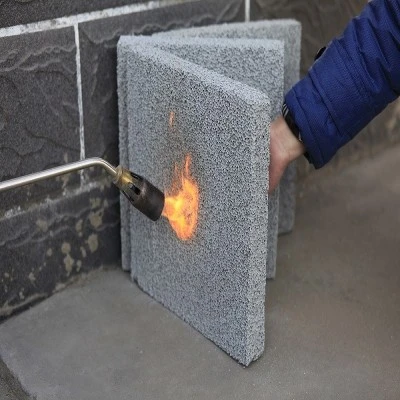
Before diving into the specifics of cement board, it's important to clarify the difference between "fireproof" and "fire-resistant."
- Fireproof Materials: These materials are impervious to fire and do not ignite or burn under any circumstances. However, truly fireproof materials are rare in practical applications.
- Fire-Resistant Materials: These materials are designed to withstand fire and prevent its spread for a certain period. They can endure high temperatures without immediately combusting, providing critical time for evacuation and firefighting efforts.
Cement board falls into the fire-resistant category. While it is not entirely fireproof, it offers significant protection against fire, making it a valuable material for enhancing building safety.
Composition of Cement Board
Cement board is a composite material made from a combination of cement and reinforcing fibers, such as fiberglass or cellulose. Its core typically consists of cement and sand, sandwiched between layers of fiberglass mesh. This composition gives cement board its strength, durability, and fire-resistant properties.
Key Components:
-
Cement: Provides high thermal mass and non-combustibility.
-
Reinforcing Fibers: Enhance structural integrity and prevent cracking under heat.
How Cement Board Reacts to Fire
Cement board is engineered to perform exceptionally well under fire conditions. Here's how it reacts to fire and what makes it a fire-resistant material:
1. Non-Combustible Nature
Cement board does not catch fire because its composition does not support combustion. This non-combustible property makes it an excellent barrier against flames.
2. High Thermal Mass
The cement in the board has a high capacity for thermal absorption. It absorbs and holds heat, slowing down the transfer of heat to adjacent materials. This acts as a thermal barrier, protecting the structure from rapid temperature increases.
3. Structural Stability
The reinforcing fibers in cement board ensure that it maintains its structural integrity even under high heat. This prevents the board from crumbling or collapsing quickly during a fire.
Fire Resistance Ratings
Cement board is often tested using the ASTM E119 standard, which evaluates the fire-resistance properties of building materials. The results of these tests determine the board's fire rating.
Key Insights:
-
Duration: Cement board typically has a fire rating of 1 to 2 hours, meaning it can resist fire for that period without significant structural compromise.
-
Implication: A 1-hour fire rating indicates that the material can withstand fire exposure for one hour before any major damage occurs.
These ratings make cement board suitable for use in areas that require fire-resistant construction materials, such as kitchens, bathrooms, and fireplaces.
Factors Influencing Fire Resistance
Several factors can enhance or diminish the fire resistance of cement board:
1. Thickness
Thicker cement boards have greater thermal mass, allowing them to absorb and dissipate more heat effectively. This enhances their ability to withstand high temperatures.
2. Density and Composition
Boards with higher density and a higher proportion of cement and quality reinforcing fibers generally perform better under fire conditions.
3. Surface Treatments and Coatings
Fire-resistant coatings can add an extra layer of protection. Some coatings are designed to **intumesce** (swell up) when exposed to heat, forming an insulating barrier that slows heat transfer.
4. Installation Method
Proper installation is crucial for maximizing fire resistance. Using the right fasteners, ensuring tight joints, and applying fire-resistant sealants can minimize weak points.
5. Environmental Conditions
Exposure to high humidity, direct water contact, or extreme temperature fluctuations can affect the board's fire resistance over time. Regular inspections and maintenance are essential to preserve its performance.
Common Applications of Cement Board
Cement board is widely used in construction due to its fire-resistant properties. Some common applications include:
- Tile Backing: In walls, floors, and countertops.
- Walls and Partitions: Especially in areas exposed to moisture and heat, such as bathrooms and kitchens.
- Fireplaces: As a protective layer to enhance fire safety.
Enhancing Fire Resistance with Cement Board Integration
Cement board is often integrated with other fire-resistant materials to create a comprehensive fire protection system. For example:
- Fire-Resistant Insulation: Pairing cement board with mineral wool insulation enhances thermal resistance.
- Metal Studs: Using metal studs instead of wooden ones further bolsters fire resistance, as metal does not ignite.
- Heat-Resistant Finishes: Adding fire-resistant finishes over cement board provides an additional layer of protection.
Why Regular Inspection and Maintenance Matter
Over time, environmental conditions and wear and tear can affect the fire resistance of cement board. Regular inspections and maintenance are crucial to:
- Identify and repair cracks or gaps that may develop.
- Ensure the board retains its structural integrity and fire-resistant properties.
- Prolong the lifespan of the material.
Conclusion
While no material is completely fireproof, cement board stands out as an excellent **fire-resistant** option for construction. Its non-combustible nature, high thermal mass, and structural stability make it a reliable choice for enhancing fire safety in buildings. By understanding its properties, optimizing installation methods, and integrating it with other fire-resistant materials, cement board can significantly slow down the spread of fire and protect structural integrity.
Whether you're building a new home or renovating an existing space, cement board is a smart investment for fire safety and durability.